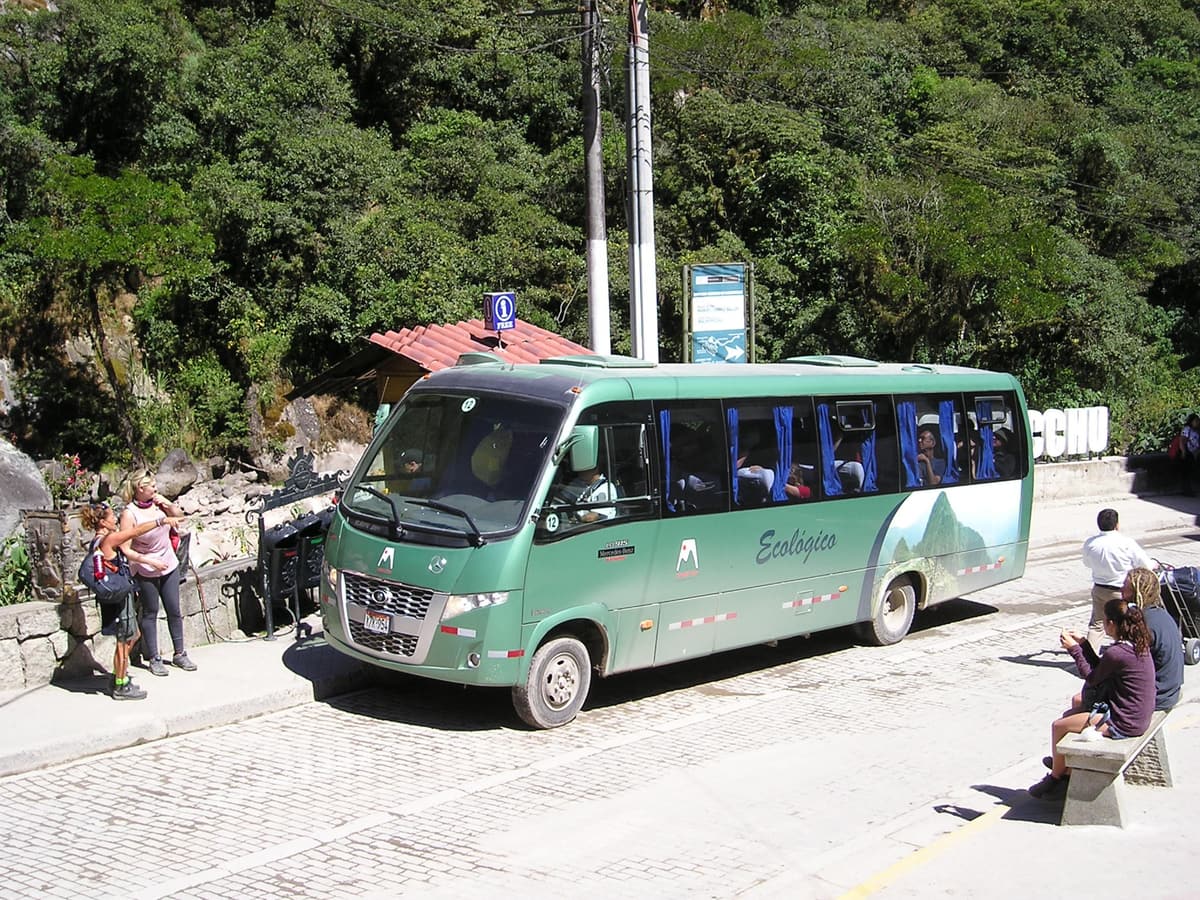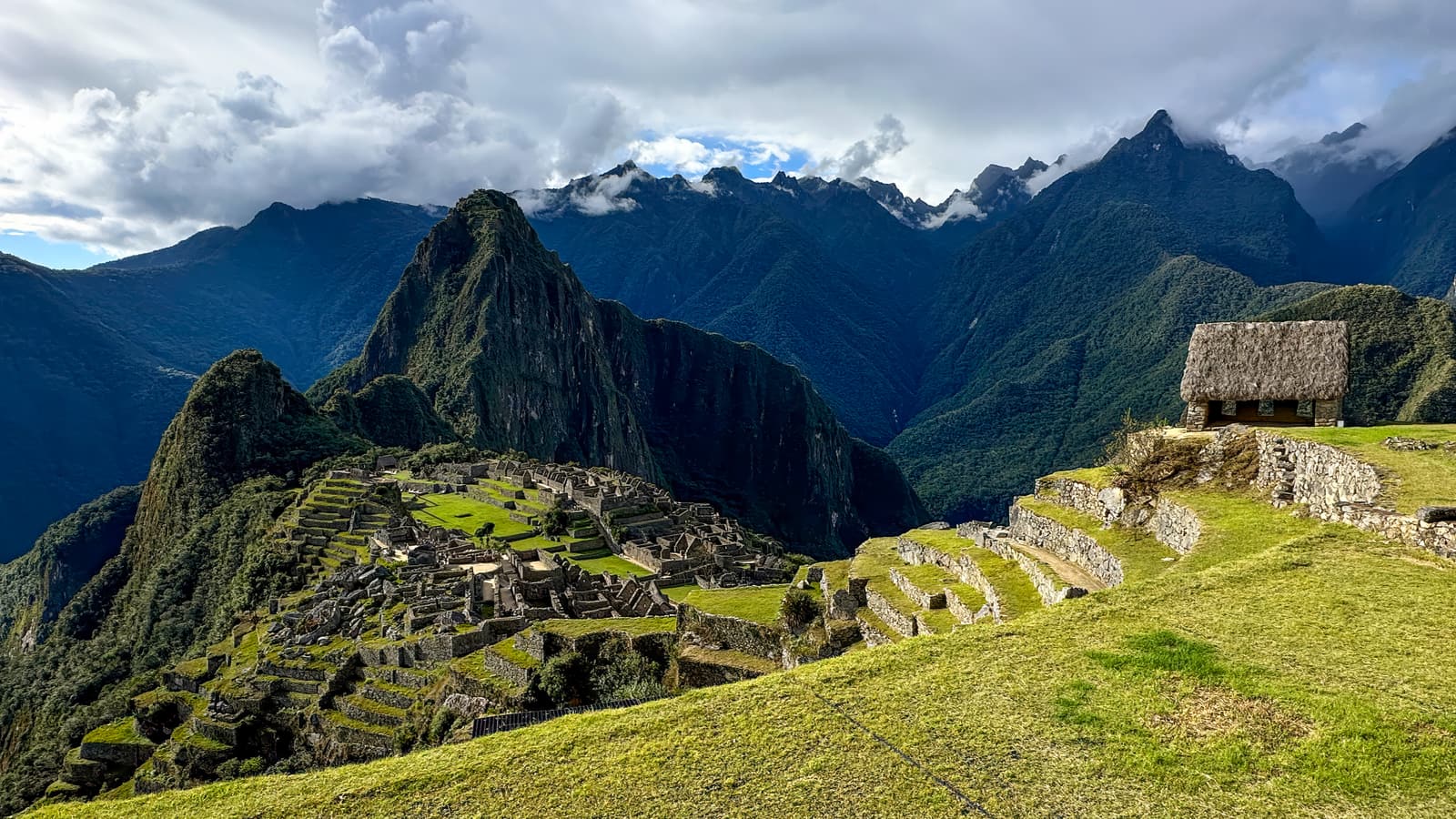
Every visit goes through Aguas Calientes (officially Machu Picchu Pueblo), the small town in the gorge below the ruins — unless you walk in on the Inca Trail. No public road reaches the town: you arrive by train, or on foot along the tracks from Hidroeléctrica. From Aguas Calientes a shuttle bus climbs to the entrance, or you can walk up.
From Cusco the usual journey is in three parts: road to Ollantaytambo, train to Aguas Calientes, bus to the gate.
The options, compared
| Route | Typical time from Cusco | Cost | Best for |
|---|---|---|---|
| Road to Ollantaytambo + train | ≈3.5–4 h to Aguas Calientes | Mid to high, by train class | Most travellers |
| Train from Poroy or San Pedro (Cusco) | ≈3.5–4.5 h | Higher; limited departures | A single scenic ride, dry season |
| Bimodal (bus + train) | ≈4 h | As the train | Rainy season, when it replaces Cusco trains |
| Bus to Hidroeléctrica + walk | ≈6–7 h road + 2.5–3 h on foot | Lowest | Backpackers with time |
| Inca Trail or another trek | 2–5 days | Highest; all-inclusive | Walkers |
By train: PeruRail and Inca Rail
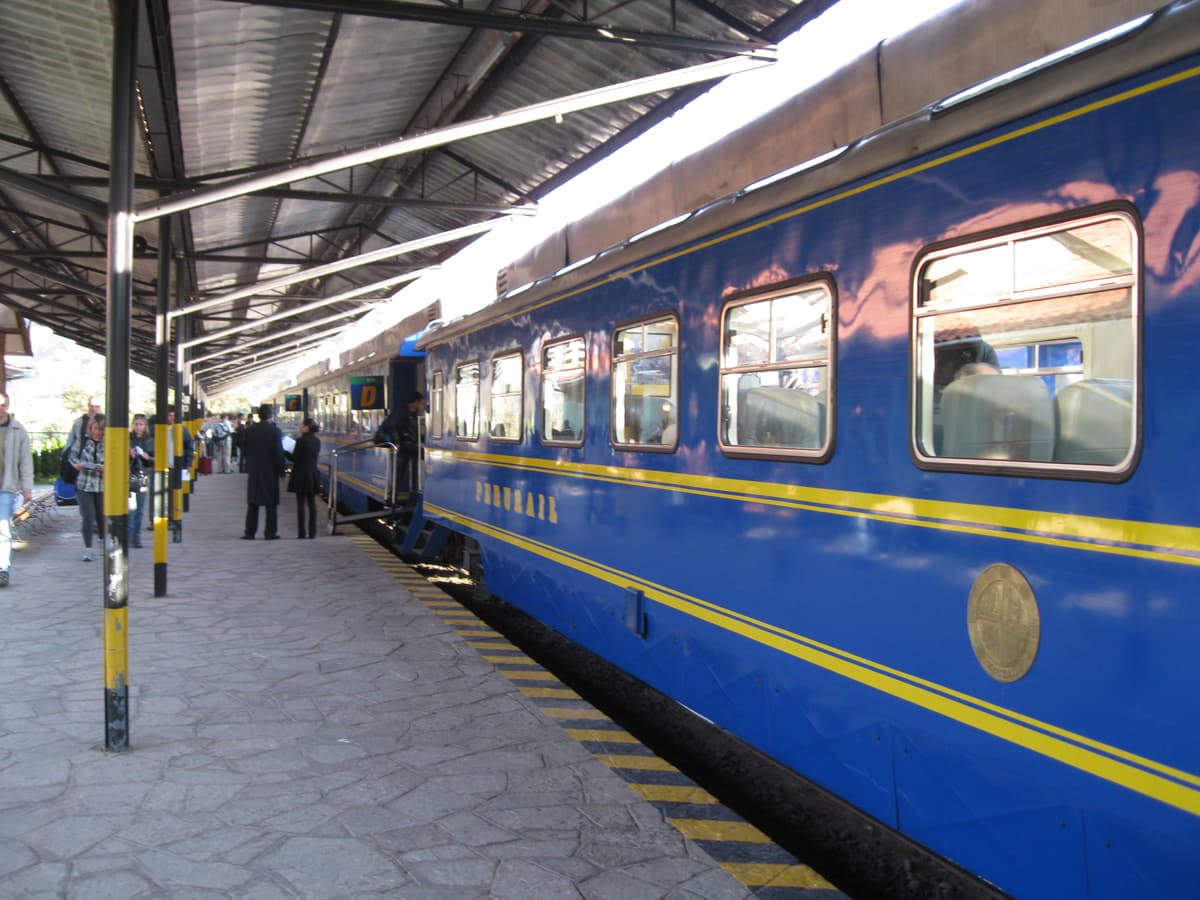
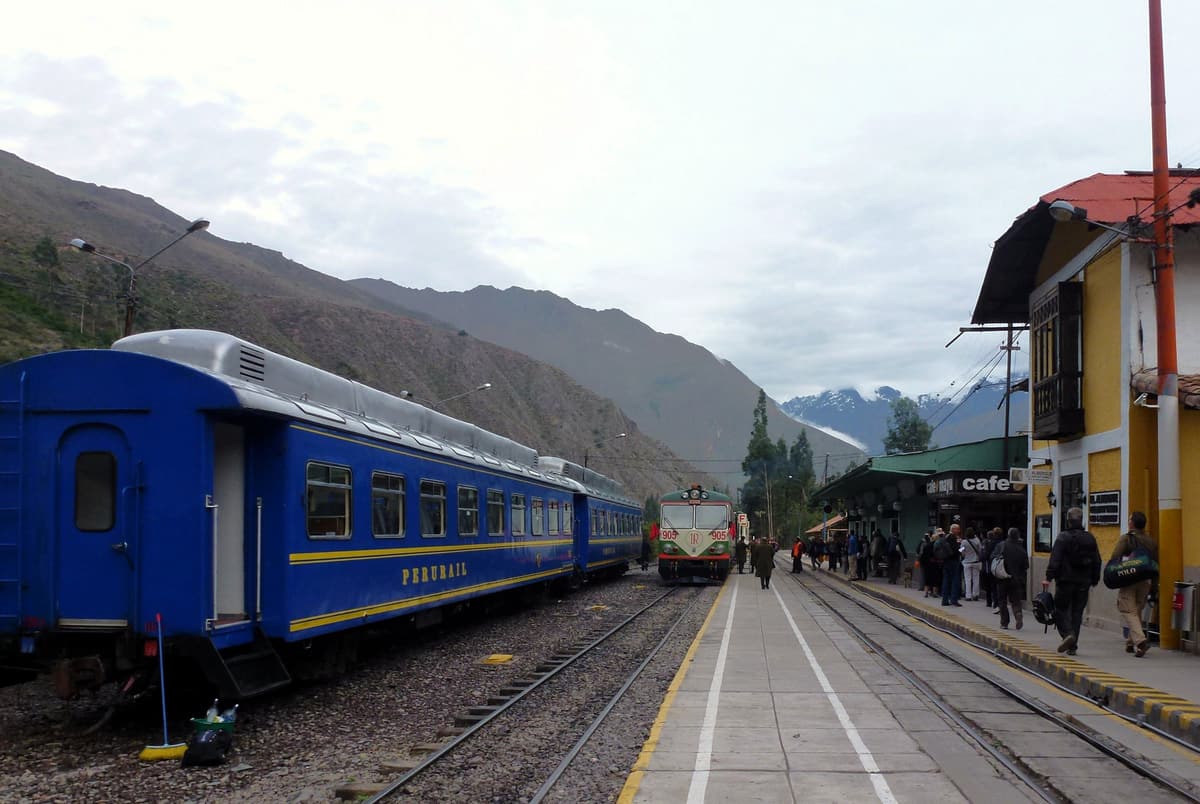
Two companies run the line. Both sell several classes, and both use the same track, so the scenery is identical — you choose on timetable, comfort and price.
- PeruRail — Expedition (standard), Vistadome (panoramic windows, and an Observatory version with an open-air carriage), and the Hiram Bingham, a luxury dining train with meals and entertainment included.
- Inca Rail — Voyager (standard), 360° (large windows and an observation carriage), First Class and a private carriage.
Ollantaytambo is the main station, with the most departures through the day; the ride to Aguas Calientes takes roughly an hour and a half to two hours. It is about two hours by road from Cusco — by shared colectivo from Calle Pavitos, taxi, private transfer, or on a Sacred Valley tour that ends in Ollantaytambo.
Poroy, about 20–30 minutes from central Cusco, and San Pedro station in the city centre have a small number of direct trains, usually in the drier months. The ride is long (three and a half hours or more) because the train zigzags out of the Cusco basin.
Train tips
- Book the entry ticket first, then a train that arrives well before your time slot — or the evening before.
- Luggage on board is limited to a small bag (commonly quoted as around 5–8 kg per person, depending on the company). Leave big bags at your hotel in Cusco or Ollantaytambo.
- You need the passport you booked with to board.
- Going towards Machu Picchu, seats on the left generally have more of the river views.
Aguas Calientes to the citadel: bus or walk
The Consettur buses are the only vehicles on the zigzag Hiram Bingham road. They leave from the main street by the river from around 5:30 a.m., run every few minutes and take 25–30 minutes. Tickets are sold at the Consettur office in town, online, or through agencies; the fare for foreign adults has been around US$12 each way, but check the current rate. You need your passport and, in the morning, patience: queues are long before the first entry slots, so arrive 45–60 minutes ahead in high season.
Walking up is free. A stepped path cuts across the road bends from the bridge over the Urubamba: allow one and a half to two hours and a climb of roughly 400 m, in humid heat. Many people ride up fresh and walk down, which takes about an hour.
The budget route: Hidroeléctrica
Minibuses leave Cusco in the early morning for Hidroeléctrica, a railway halt beyond Santa Teresa, crossing the Abra Málaga pass. The drive takes six to seven hours on a road that is narrow and, in the rains, prone to landslides. From Hidroeléctrica you walk about 10–11 km along the railway line to Aguas Calientes — flat, shaded and well trodden, two and a half to three hours. Most people sleep in Aguas Calientes, visit the ruins the next morning and walk back for an afternoon minibus.
It is much cheaper than the train, and more tiring. Avoid it in the wettest months (January to March) and allow a buffer day.
When things go wrong: strikes and suspensions
Train services are occasionally suspended at short notice — by landslides in the rainy season, and by regional strikes or protests, which have blocked the line several times in recent years. It is rare on any given day, but it does happen. Keep a spare day between Machu Picchu and your flight out of Cusco, buy flexible or insured tickets where you can, and check the news in the days before you travel.
Coming from elsewhere
- From Lima: fly to Cusco (about 1 h 20 min). There is no direct way to Machu Picchu that skips the Cusco region.
- From the Sacred Valley: if you are staying in Urubamba or Ollantaytambo you are already close to the train — a good reason to sleep there.
- On foot: see our guide to the Inca Trail and the other treks.